

Ukraine warns Putin his shadow fleet is no longer 'civilian'

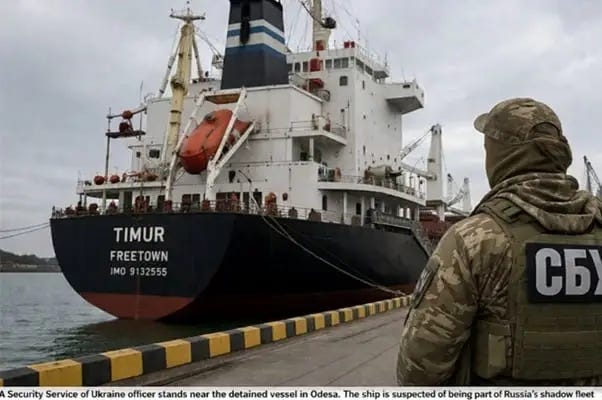
Ukraine has launched a fresh legal and diplomatic challenge against Russia’s vast shadow fleet, arguing that vessels used to transport Moscow’s oil exports may no longer qualify as ordinary civilian ships under international maritime law.
In a letter sent to the International Maritime Organization (IMO) on June 26, Ukrainian Deputy Prime Minister Oleksii Kuleba questioned whether Russia’s sanctions-busting tanker network can still be treated as normal commercial shipping.
“Legitimate questions arise as to whether the activities of such vessels can be regarded solely as ordinary commercial operations,” Kuleba wrote, according to reports from Financial Times.
Kyiv argues that Russia’s oil and gas carriers are not simply trading vessels but are a crucial source of revenue helping fund the Kremlin’s war effort.
Russia’s shadow fleet under pressure
Russia has built a huge network of ageing tankers with unclear ownership structures, offshore operators and foreign flags to continue exporting oil despite Western sanctions.
The fleet has become a central part of Moscow’s strategy to keep energy revenues flowing, with thousands of vessels believed to be involved in moving Russian petroleum products around the world.
Ukraine has increasingly targeted these ships, arguing that disrupting the network weakens the financial machinery behind Russia’s invasion.
The Kremlin responded by accusing Kyiv of “terrorism” over a March attack on the Russian-flagged LNG tanker Arctic Metagaz in the Mediterranean.
Ukraine rejected the accusation, instead highlighting what it described as Russia’s own attacks on civilian maritime traffic.
Kyiv accuses Russia of targeting shipping
In his letter to the IMO, Kuleba said Russia had repeatedly violated maritime law by attacking commercial vessels.
He claimed Russian forces had attacked 59 merchant ships since the full-scale invasion began, including the Turkish cargo vessel MV Victress and the German-owned Helga, which was carrying 25,000 tonnes of corn to Ukraine.
“These attacks constitute further evidence of the Russian Federation’s blatant disregard for international humanitarian law,” Kuleba said.
Growing evidence of military links
The debate over Russia’s shadow fleet has intensified after investigations suggested some vessels may have direct links to Russian security structures.
A report by the Organized Crime and Corruption Reporting Project (OCCRP) found that the Gazprom-owned LNG tanker Marshal Vasilevskiy, which supplies Russia’s Kaliningrad region, had been fitted with heavy machine guns positioned behind sandbagged firing positions.
Journalists also identified several people aboard the vessel with Russian military backgrounds, raising further questions over the boundary between commercial shipping and military support.
Europe tightens the net
European governments have increased efforts to disrupt Russia’s shadow fleet as they attempt to enforce sanctions on Russian energy exports.
The United Kingdom seized a shadow fleet tanker carrying Russian cargo in the English Channel on June 14, while France intercepted another suspected vessel in the Mediterranean later in the month.
Officials are also pressuring international ship registries to remove vessels connected to the network, potentially making enforcement action easier.
According to shipbroker Clarksons, Russia’s shadow fleet consists of around 1,800 vessels, including roughly 1,500 oil tankers.
Many are more than 20 years old — an age when commercial vessels are typically retired because of safety concerns.
A new battle over Russia’s oil lifeline
The fight over the shadow fleet has become another front in the wider economic war between Russia and Ukraine’s allies.
For Moscow, the tankers represent a vital route for maintaining energy income despite sanctions.
For Kyiv, they represent the financial pipeline keeping Russia’s war machine supplied.
As scrutiny grows over the ageing fleet, military links and sanctions violations, Russia’s maritime escape route is facing increasing pressure from Ukraine and Western governments determined to restrict the Kremlin’s ability to profit from its energy exports
.